

When Independence Becomes the Whole Point
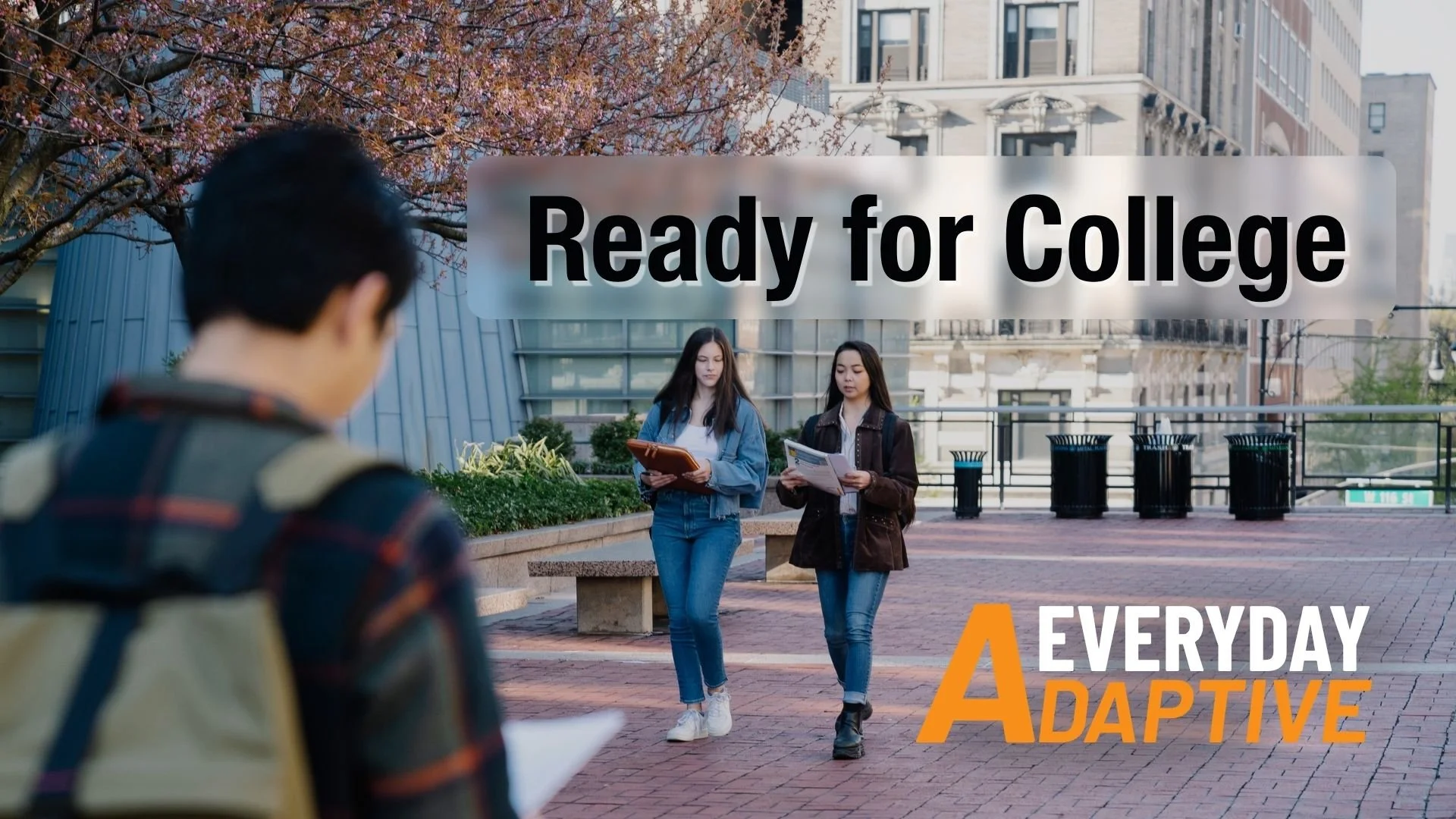
A high school senior with cerebral palsy was ready for college. One morning routine was holding him back, and his story speaks to a moment so many families know.
"How can I do this more quickly and independently? I can't be late for class."
That question came from a high school senior who had just been accepted into college. He was excited about living on campus, making new friends, and fully experiencing college life, the same things on the mind of nearly any student heading off to school. But one concern was holding him back, and it was not his coursework or his roommate assignment. He had worn AFOs, the ankle foot orthoses that support safe standing and walking, for 18 years due to cerebral palsy. Each morning, his mom helped him put on his braces and shoes. On his own, the process could take close to an hour.
His question carries more weight than it first appears to. It is about self-esteem, confidence, and dignity, and it points to something families navigating adaptive equipment come to understand: independence needs change at life's transition points.
The morning routine that works at home, with a parent nearby and time to spare, can stop working the moment life changes shape. Heading off to college. Moving into a first apartment. Starting a new job. Traveling alone for the first time. These transitions ask new questions of a person's daily routines, and the answers that served them well for years may suddenly need rethinking.
This is one of the least discussed realities of adaptive living. The need for equipment does not stay still, because life does not stay still. A person's tools and supports deserve to be revisited at the milestones, not just at the diagnosis. The young man heading to college did not need more help. He needed a different kind of help, the kind that would not require another person in the room.
For caregivers, these transition points carry their own emotional weight. Helping someone each morning for 18 years becomes part of the rhythm of a family's life, and stepping back can feel as significant for the parent as the independence feels for the young adult. Caregiving rarely ends all at once. More often, it evolves, one task at a time, into something new for both people.
The occupational therapist who met this young man understood the assignment. The right adaptive tool, in this case one designed to hold an AFO and shoe in position for independent donning, turned a frustrating hour into a manageable part of his morning. He was not asking for the impossible. He was asking for what so many people navigating adaptive equipment are asking for: a way to carry their own routine into the life waiting for them.
That question deserves a real answer, at any age and any stage.
For the full story, including the occupational therapist behind the solution, visit the original article at The Original AFO Assist: It Always Feels Impossible...Until You Do It
Everyday Adaptive is produced by AECorner Community in partnership with Brilliant Beam Media.